
How to Use Kawaii Stickers in Your Bullet Journal
Everything you need to know about decorating your bullet journal with kawaii stickers — layouts, themes, and which packs to start with.
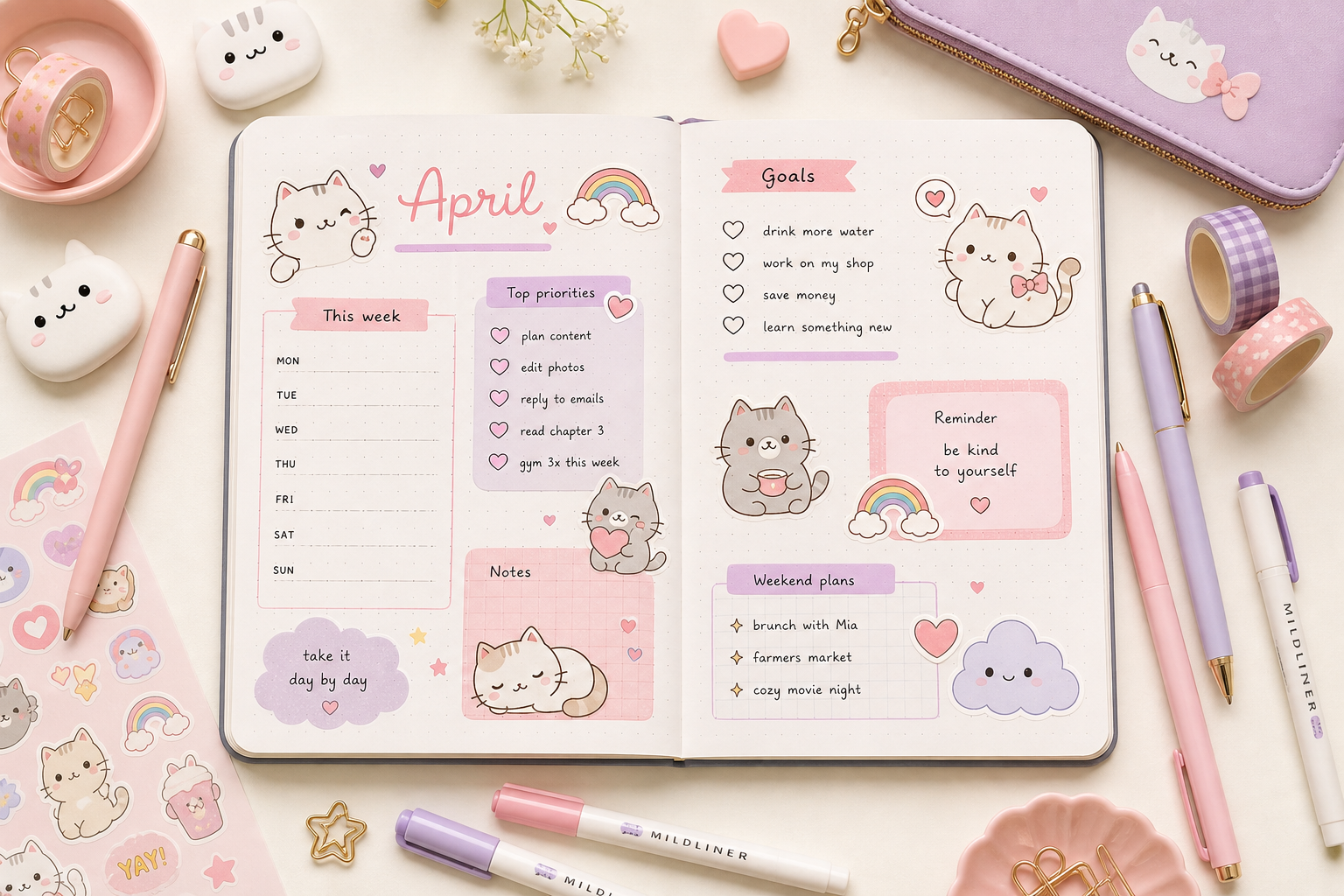
Stickers and bullet journals: a perfect match
The bullet journal system — invented by Ryder Carroll as a flexible analog productivity tool — has evolved far beyond minimalist black-ink layouts. Today, the bullet journal community is one of the most visually creative in journaling, and kawaii stickers are one of the easiest ways to level up any spread.
Unlike scrapbooking or art journaling, bullet journaling still needs to be functional. The best kawaii sticker approach enhances the functionality rather than replacing it — using stickers as visual anchors, section headers, habit tracker markers, and emotional tone-setters that make the journal both useful and delightful.
This guide will show you exactly how to do that.
The bullet journal sections that benefit most from stickers
Not every page in a bullet journal needs stickers — in fact, being selective makes the pages that do have stickers feel more special. Here are the sections where kawaii stickers make the biggest functional and aesthetic impact:
Weekly spreads
The weekly spread is the heartbeat of a bullet journal and the best canvas for stickers. A set of consistent day-of-week stickers instantly creates visual structure — the eye knows where each day starts before reading a word. The Kawaii Days pack was designed precisely for this: 28 pastel day-of-the-week stickers, four adorable variants per day (each with a different kawaii animal friend), so your weekly spreads never look the same but always feel cohesive.
Monthly cover pages
Monthly covers are where you can be most creative and least functional — a single beautiful sticker or cluster of thematically matched stickers, a large header, and the month name. The Cloud Cats pack is ideal for monthly covers: the nine chibi cats in soft pinks and lilac can anchor a spread in a way that feels instantly charming without needing art skills.
Habit trackers
Habit trackers work especially well with small, consistent stickers used as checkboxes or reward markers. Use one sticker type per habit (a tiny cat face, a rainbow, a heart) and fill them in as the month progresses. By day 30, a completed habit tracker decorated with stickers looks genuinely beautiful.
Study and work logs
Study logs with motivational stickers feel encouraging rather than pressuring. The Study Buddy pack is built for exactly this: books, pens, "you've got this" markers, and stationery-themed icons that make revision notes and project logs feel supportive.
Collections and project pages
Collections — the bullet journal term for themed lists like "books to read," "movies to watch," or "places to visit" — come alive with a relevant sticker cluster at the top. A Rainbow Planner pack gives you functional dividers, hearts, and rainbow icons that work as universal "section header" stickers for any collection type.
How to place stickers without wasting them
The most common beginner mistake is sticking stickers directly without planning the layout. Here's a system that prevents waste:
- Sketch the spread lightly in pencil first — layout, text placement, boxes and grids
- Decide where stickers will go — mark the spots with a light pencil X or circle
- Peel one sticker at a time and place deliberately — no "maybe I'll add another one here" mid-session
- Erase your pencil marks if any are showing after the stickers are placed
This approach is especially useful for multi-sticker page sections, where you want a cluster of 3–4 stickers to feel balanced rather than random.
Building a bullet journal sticker system
A "sticker system" means using specific stickers consistently for specific functions, so they become a visual shorthand across your whole journal.
Examples:
- Star sticker = priority item
- Heart sticker = personal/self-care entry
- Calendar sticker = event or deadline
- Checkmark sticker = completed habit
- Lightning bolt sticker = urgent or important action
Once you have a system, add a small legend page at the front of your journal showing what each sticker means. Visitors to your journal (including future-you flipping back through old months) will immediately understand the visual language.
Themes and seasonal spreads
One of the joys of kawaii sticker journaling is building themed monthly spreads. Match your sticker pack to the time of year, your current mood, or an upcoming event:
- Spring — floral packs, pastel rainbow stickers, fresh mint colors
- Summer — bright tropical palettes, sun and cloud stickers
- Autumn/Fall — warm mauve and butter yellows, cozy indoor themes
- Winter — soft blue and lilac, celestial and snow themes
Building a seasonal rotation using different sticker packs keeps your journal visually fresh across the year while maintaining the cohesive kawaii aesthetic.
Starting your first decorated spread
If you're completely new to decorated bullet journals, here's the lowest-barrier first spread:
- Open to a fresh double-page spread
- Write the week dates as headers across the top in bubbly writing
- Place one Kawaii Days sticker above each day column
- Draw simple boxes for tasks and events below each day
- Add one small decorative sticker from Cloud Cats or any pack you like in a corner
That's it. You've made a decorated weekly spread. Everything after this is just more of the same: more stickers, more layouts, more spreads.
You might also enjoy
- Kawaii Journaling 101 — the complete beginner's guide to kawaii journaling
- Pastel Color Palettes That Always Look Cute Together — pick the perfect palette for every spread